Showing posts with label bushcraft. Show all posts

Saturday, January 5, 2013

spiritual land stewardship


Restoule, Ontario
For those of us magical practitioners and Pagans that work closely with the land and nature allies, we are likely to also be passionate about conversation and environmental issues. We may be members of environmental groups, grow some of our own food, buy local and organic, and take other steps to tread lightly as possible; others may feel that they are obliged to protect certain ecologically sensitive and sacred areas through more spiritual means.

Over the last little while I have been happy to note that there are others in my region who act as spiritual land stewards or are interested in doing so. With that in mind, I thought that I would share some resources that I have found very helpful, as well as a few posts that I have done in the past that might give folks some ideas.

Some of these resources are specific to my region, while some are for any region. I also think that any of the resources of a spiritual nature could be adaptable to just about any faith or magical practice.

Books

Animal Tracks of Ontario by Ian Sheldon
Art of Conversation With the Genius Loci by Barry Patterson {I don't agree with all of this book, but I think that it is still worth a read}
At Home in Nature: Modern Homesteading and Spiritual Practice in America by Rebecca Kneale Gould
Birds by Roger Tory Peterson 
Discovering Rock Art in Ontario's Provincial Parks by Thor Conway 
Mammals of Ontario by Tamara Eder
Mushrooms of Ontario and Eastern Canada by George Barron
Native Trees of Canada
Old Man's Garden by Annora Brown
Ontario Weeds: Descriptions, Illustrations and Keys to Their Identification
Ontario Wildflowers: 101 Wayside Flowers by Linda Kershaw
The Book of Swamp and Bog by John Eastman
The Forest Trees of Ontario by J.H. White
The Woodland Way: A Permaculture Approach to Woodland Management

Articles
 Websites
If you know of any resources that are not on here, please feel free to share them in the comment section. :)

Sláinte!

Laurel

Saturday, March 31, 2012

Luverly of the Week: ThePlantEncyclopedia.Org


The Plant Encyclopedia is a website with a treasure trove of information of over 300,000 plants, which are neatly categorized:


I have just began to explore the website, and I can see myself spending a lot of time on there. It is quickly becoming one of my favourite online resources! :D

Sláinte!

Laurel

Tuesday, June 21, 2011

Midsummer in the Forest & by the Rapids

I got back a couple of days ago from the annual "crazy lady Midsummer weekend" at River Run {both Aymi & I went last year}. Even though I decided to stay off the rapids this year, I am still have a wee bit of recovering to do. Hehe.

It was a weekend of long nights around the fire with music and drink...


...and early mornings rising with the sun to get in as much time as possible to soak in the gorgeous scenery.


I am glad I decided not to raft this year as it gave me a chance to toddle off by myself and do a little ritual...


...and after leaving the appropriate offerings, I wildcrafted some much-needed pretties from the forest and river.


A little more than half of our gaggle decided to raft, and at around lunch time the rest of us were bussed out to meet up with them for lunch.


I forget what this particular set of rapids has been dubbed, but I know that they are mellower than many of them on the route.


After going on them last year, I much prefer to admire their beauty from the shore! ;)

Sláinte!

Laurel


post signature

Sunday, May 22, 2011

Maytide Highs & Lows

{the lilacs are starting to bloom!}

I hope everyone is having a wonderful May so far! :) This Bealtaine season has been a mixed bag for myself.

Due to one reason or another some of our rituals were put on hold until last week, but I don't mind an extended season. Spreading out feasting and celebrations is always a good thing as you get older. ;)

Over the last year there has been a rowan tree that I have been "courting" with offerings in the hopes that I would be able to harvest some of its wood. As I mentioned previously, I will not take any live wood from a rowan outside of the "two days of Bealtaine" {which I believe to be between May 1st to May 5th}, so the window of opportunity is fairly slim. I was looking forward to getting some from this lovely tree, but it didn't quite work out that way.

The rowan is just a bit of a walk from my home, so I usually will bring a libation whenever I walked that way. I would also make sure to go to it once a month to make a proper offering, which I last did in mid-April. That was the last time I had went by to see the rowan before I went on May 3rd to make my small harvest. Unfortunately the tree had been badly damaged by another tree which had fallen onto it, which I presume the cause was a pretty nasty storm we had a few days prior.

I felt terrible. I certainly was not going to take a cutting after seeing that poor tree in that condition. A big branch had broken off the rowan, which was much more than I needed but I took it with the assumption that I was "supposed to". It was not what I had in mind though. A coincidence or a mistake on my part? {Feedback from other workers & worshippers would be appreciated!}

I will have to find another rowan to court for next year {I think one should harvest from a different tree each year, both for practical and superstitious reasons}, but that old tree will still be getting regular offerings and libations.

On a brighter note, a friend of mine who just purchased an old farmstead last Autumn allowed me to take the first cream of her spring-fed well and gave me the Bealtaine morning milk of her goat. In return I did a little blessing ritual for her critters and crops {Carmina Gadelica was again my source for this, which I took a few of the prayers/incantations from the "Labour" section and altered them for my needs}.

She has also welcomed me to wildcraft there whenever I like...the area around her is reputed to be bountiful in morels, chantrelles, fly agaric & oyster mushrooms!

Farm folk are awesome folk. :)

Speaking of harvests, I have had some going on in my own garden! I have been regularly picking dandelion flowers {almost time to make more dandelion vinegar} and leaves, rhubarb, fiddleheads, and sweet woodruff.


With the sweet woodruff I decided to have a try at making some maiwein, which went down quite nicely I must say. This is the concoction that I came up with:


A bottle of white wine {I used Pelee Island Blanc de Blanc and works well enough. Something with a Gewurztraminer grape would probably have been even better.}

9 sprigs of fresh Sweet Woodruff

9 fresh Rowan berries {I harvest them in late August/early September and keep them in the freezer}

Stick the Sweet Woodruff and Rowan berries in the bottle of wine, put cork back on and let it sit a room temperature for 3 hours. Drink chilled.

A little while back we did some planting too. These are the seeds we have planted so far:


{Cupani sweetpeas}

{"Devon" mangetout peas}

{Red Russian kale}

In general I would say that things are coming along pretty good in the garden and on the rest of the property. We have plenty of volunteers such as...

{wild strawberry near our drive way}


The sweet woodruff is going ape shit in the shade bed....

{a cuter version of what happens in Aliens}

And the wild ginger is flowering!


Sláinte!

Laurel


post signature

Saturday, April 23, 2011

Saturday, March 5, 2011

Wildcrafting Cattails

If you have never wildcrafted cattails, you don't know what you are missing! Here is the start an excellent series of videos by HerbMentor on how to harvest and prepare cattails. Sláinte! Laurel


Monday, February 7, 2011

Half Way 'Til Spring

I was hoping to do a post on the lore behind Imbolc, but I guess that will have to wait til next year. Instead I have been really busy the last little while painting, cleaning the house, and do all sorts of other things in preparation for and in celebration of Imbolc.

While across the pond the first stirrings of Spring must be happening by now, we are only half way through the deep freeze of our Northern Ontario Winter.But according to a few groundhogs, including Shubenacadie Sam and Wiarton Willie, it might just come early this year. If you ask me, it can't come soon enough!

I painted my kitchen, which was a pain in the arse, but the new colour is luverly, methinks.


I also cleaned the house from to to bottom. I made a "spiritual cleaning tea" with a mix of plant pretties that have excellent magical cleaning and protective properties. Below is the recipe:

Sweet woodruff, rowan berries, birch bark {fallen!}, juniper berries, cedar, lemon balm, peppermint, sweetfern, thyme, dandelion root, witch hazel, st john's wort, and sage. Boil water and pour over ingredients in a glass jar. Let it steep for a few hours. Drain liquid through cheese cloth {and I put the plant stuff in the compost after}. Mix tea in with cider vinegar and keep in a clean jar. It can be refrigerated for about 3 months no problem. To use mix with 3 parts water in a spray bottle.

On the eve of Imbolc I got our altar set up and ready for our ritual the next day. Before going to bed I left some colcannon and whiskey outside as an offering and a piece of ribbon in for Brigid to bless.

I got up in the hours before dawn {best cure for too much whiskey the night before: strong coffee and a cold shower!} to get everything else ready for the day. I baked bairín breac to be used as offerings with a little left over for us to nom. I also scored some local homemade Amish butter for the same purpose, and of course the obligatory whiskey and honey too.

I have been promising a couple of our blog readers for some altar peektures for a while now, and looky, I am finally living up to that promise. ;)
{Deities' altar}
{Brigid's altar, which is temporary} {Ancestral altar}
I did the house blessing ritual that I usually do on the cross quarter days and I also made a new rowan and red thread charm. This one is just a very simple one of bunched leaves and berries and I hung it over the house door way.
Oh, I suppose I should mention that this bunch was found on the ground by a tree that is in one of the places I frequent for wildcrafting. It is traditionally bad form {and bad luck!} to cut a rowan outside of the "two days of Bealtaine", which I am in agreement with Seren of Tairis who thinks that this is between the new date of Bealtaine {May 1st} and the old {probably May 5th}. As she points out as well, there seems to be no lore against picking the berries outside of this time.
Sláinte!

Laurel

Wednesday, November 3, 2010

Tuesday, July 6, 2010

Magic With Weeds


Edit: Thanks to Medusae for pointing out that one should be careful when harvesting Queen Anne's Lace, as it could also be Poison Parsnip, which can cause nasty rashes and burns.

Friday, January 22, 2010

Wortcunning: Sweetfern {Comptonia peregrina}


Other Names: Sweet-fern, Sweet Fern, Fern Gale, Spleenwort Bush, Sweet Ferry, Meadow Fern.

Description: The name 'Sweetfern' can be a tad bit misleading, since it is actually not a fern but a deciduous shrub. When one sees it, especially when young, it is understandable why it has 'fern' attached to its name; the foliage strongly resembles narrow fern leaves.

Sweetfern grows to about 3 feet high, its trunk is brown with a hint of red and can sometimes be quite hairy. The whole plant can smell very pleasant, especially the leaves when the are rubbed or bruised.

It is native to North America, and can be found growing in the wild from Quebec to the East, Saskatchewan in the West, to about North Carolina in the South. It is in the Myricaceae family, and the Bayberry is a close relative.

Warnings: As with all herbs, one should make sure to be thoroughly informed before ingesting them, and is best to do so under the guidance of a qualified healer.

Cultivating: Sweetfern can be found growing on hillsides, open fields, and in places where pine trees thrive. It does well to hardiness zone 3, and needs to be grown in full sun. It is drought resistant and prefers soil that is sandy, acidic and well-drained. It makes an excellent ground cover on land that has very poor quality soil!

You can buy plants at nurseries, but it maybe a little difficult to find. Another option is to propagate it through root cuttings, instead of seeds {unless you are up for an extreme challenge!}. Once Sweetfern has made itself at home, it needs very little upkeep and will spread very well via its rhizomes. It is a perennial and will mature around its third year.

One disease to be aware of is Sweetfern blister rust, which can also spread to various pines including Jack Pine, Scots Pine, and Ponderosa Pine.

Medicinal/Remedial Properties and Lore: Anti-inflammatory, aromatic, astringent, emollient, haemostat, stimulant, tonic.

Sweetfern has been used by both Natives and settlers to treat various different ailments. One of its most popular uses that is still appreciated today is as a tonic. All parts of the plant would be used, especially the top leaves in a tea to promote overall good health.

A decoction was used internally to treat dysentery, leucorrhea, rheumatism, diarrhoea, and internal bleeding. Henriette's Herbal recommends a dosage of from 1 to 4 fluid ounces, 3 or 4 times a day.

It is apparently quite effective when used topically to sooth Poison Ivy and other irritations, and can be used in this manner to treat rheumatism as well.
Magical Properties and Lore: According to Melvin Gilmore in Some Chippewa Uses of Plants, Sweetfern was burnt as an 'incense' in religious ceremonies by some Indigenous poeple.

European settlers would sometimes use it in folk magic for love talismans and spells, and was sometimes planted in their farm fields in the hopes that some of its hardy properties would brush off on to their own crops.

Other Uses: The nutlets are edible and apparently quite tasty! The leaves can be used to season foods, such as poultry or fish as well. Growing it in the garden is handy as it improves the soil by fixing the nitrogen, and is an excellent plant for wildlife. Deer, birds, and butterfly larvae will feed on Sweetfern, and birds such as grouse and killdeers will nest underneath it.

Sláinte!

Laurel

Thursday, October 29, 2009

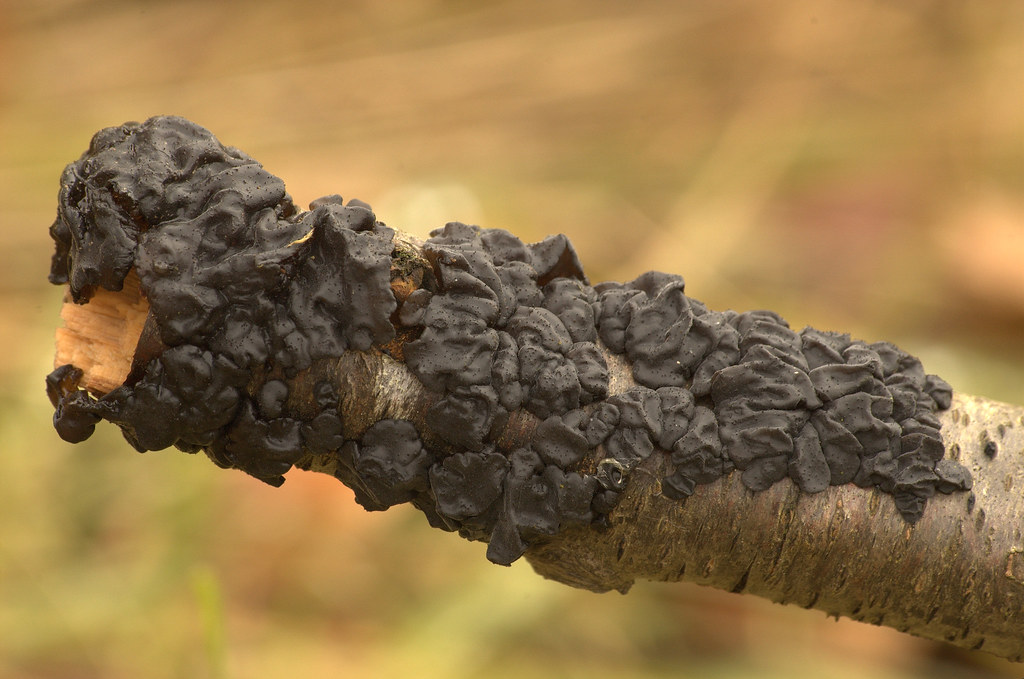
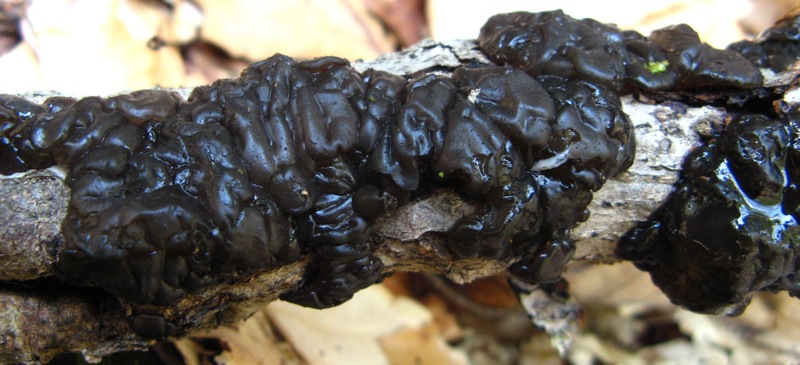
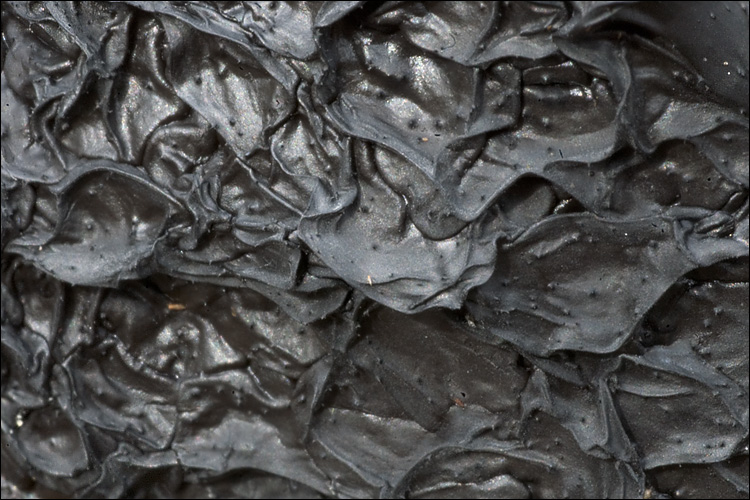
Wortcunning: Black Witches Butter {Exidia glandulosa}

Photo from AnneTanne


Given that Samhain/Hallowe'en is only a couple days away, I thought that Black Witches Butter would be a most suitable candidate to do a wortcunning post on. It is not the most lengthy one I have done, but I hope you all enjoy it nonetheless.

Other Names: Black Faery/Fairy Butter, Black Jelly Fungus, Black Jelly Roll, Warty Jelly, Devil's Butter, Troll-Smor.

Description: One could not say with a straight face that Black Witches Butter is a pretty fungus, and I have come across a few that are very reminiscent of poop. But physical beauty is certainly not everything!

Black Witches Butter is a jelly fungus, just like the similarly named Gold Witches Butter. It is anywhere from a greenish brown to almost black in colour, and comes in masses up to 30 cm in diameter. Although generally jelly-like, when in very dry weather, it becomes crusty and can sometimes look like a completely different fungus. It can be found in North America and in many places in Europe.

Warnings: As with all herbs, one should make sure to be thoroughly informed before ingesting them, and is best to do so under the guidance of a qualified healer.
I have not ingested it myself, so I am certainly not qualified to say if Black Witches Butter is edible or not. There also seems to be quite a wide disagreement on its edibility, so with that said, it is probably best to err on the side of caution.


Photo from Cornell Fungi


Cultivating: Black Witches Butter is a fairly common sight in hard and mixed wood forests, most often seen in cooler regions. It is generally found on recently fallen hardwood branches, especially on those that once belong to an oak, birch, and alder tree. The fruits are seen in Spring and Autumn, and sometimes during a cool period in Summer and a warm one in Winter.

Medicinal/Remedial Properties and Lore: In Asia, many different jelly fungi have been used for their healing properties for hundreds of years. They are most coveted for being immune boosters, and to help with health conditions effecting circulation and breathing.

According to The Hiker's Notebook, jelly fungi have been found to:

...reduce inflammation, lower cholesterol and are useful in the treatment of allergies and diabetes.

The Hiker's Notebook goes on to say:

A group of Israeli and Ukrainian researchers evaluated fungi of the Tremella genus in 2000 and confirmed that they exhibited antitumor properties and that they could be used to "improve immunodeficiency … and to prevent senile degeneration of microvessels."

Photo from amadej2008

Magical Properties and Lore: In Popular Names of British Plants by Dr. R.C. Alexander Prior, it got its name from:

its buttery appearance, and unaccountably rapid growth in the night, which has given rise to a superstitious belief, still prevalent in Sweden, that witches milk the cows,and scatter about the butter on the ground.

The authors of English Botany give credit Johann Jacob Dillenius for inspiring the name, because according to him, Black Witches Butter was thrown on a pyre to counteract malignant witchcraft.

I have personally used it in this manner for banishing magic, and have found it quite effective. I have some in my possession and will be using it for this purpose again soon.

Other Uses: None really that I know of, although it could be perhaps used in a prank to mimic poop! ;)

Sláinte!

Laurel

Monday, August 10, 2009

Wortcunning: Gold Witches Butter {Tremella mesenterica}

Other Names: Faery/Fairy Butter, Yellow Brains, Shot Star, Golden Jelly Fungus, Star Jelly, Golden Jelly Roll, Yellow Trollsmor, Sun Clumps

Description: Gold Witches butter is a jelly fungus that is commonly found in North America, Australia, and in some parts of Europe and Asia. Depending on the beholder, one could say that it has an unpleasant resemblance of brains, although I personally think it is quite lovely.

Its colour ranges any where from a light butter to a bright orange, and its texture is very jelly like. As it dries it becomes hard and often a rusty orange in colour. It is not uncommon to see clumps growing together, and they generally reach about 5
cm in height and 12 cm in diameter.

Warnings: As with all plants, one should make sure to be thoroughly informed before ingesting them, and is best to do so under the guidance of a qualified healer.

As far as I know there are no health warnings against ingesting Gold Witches Butter, although if you are looking to harvest it, make sure that you know what it is! There are many different fungi that can cause unpleasant side effects, so please do your research (especially field research!).


Cultivating: The natural habitat for Gold Witches butter is in temperate deciduous woodlands, and can easily be found in Fall and Winter on dead wood of deciduous trees such as oaks, alders, elders, birch, beech, and eucalyptus. It actually lives off of other fungi that decay wood, species like Aleurodiscus.
Although it is an abundant fungus, C. Michael Hogan warns:
...its importance is clear for nutrient recycling and soil manufacture within hardwood forests. Its abundance and role in such forests is threatened by systematic deforestation as the human population further expands. Such fungi also demonstrate the significance of avoiding overpruning and removal of snags and fallen trees in hardwood forests.
Medicinal/Remedial Properties and Lore: Botanist Hugh Davies of Anglesey was a suitable cure when rubbed on chilblains (Medicinal Plants in Folk Tradition).
Today there is research being done on the medicinal properties of Gold Witches butter; in a 2004 report called The Isolation, Structure, and Applications of the Exocellular Heteropolysaccharide Glucuronoxylomannan Produced by Yellow Brain Mushroom Tremella mesenterica there were claims that some of those properties include:
...immunostimulating, protecting against radiation, antidiabetic, anti-inflammatory, hypocholesterolemic, hepatoprotective, and antiallergic effects.

Magical Properties and Lore: According to Tom Volk, Gold Witches Butter got its name from Eastern Europe, where it is said that it shows up on the gate or entrance of a house of those who have been curse by a Witch. He goes on to say that the only was to break the curse is to pierce the fungi with straight pins.

In Toads and Toadstools, Adrian Morgan says that it was burnt in Sweden as protection against malignant spirits, and got the nick Star Jelly in England because it was believed to be a fallen star. It got the name Star Shot in Scotland for the same reason

Other Uses: Gold Witches Butter is edible, but is tasteless. It would probably be a suitable addition to stew or soup.

Sláinte!

Laurel

Friday, May 22, 2009

Wortcunning: Common Comfrey {Symphytum officinale}


Nodding gaily as Fine Folks nest
Just a leaf or two please
To bring my poor bones rest
Take over my fields
To nourish my fold
I harbour my Blackwort
More than I do gold.
~ Blackwort
, dated around the late 1800's.

{The above is a rhyme I had found in my Great Grandmother's writings; I am not sure if she had wrote it or if it was passed down to her.}

Other Names: Knitbone, Ass Ear, Blackwort, Yalluc, Church Bells, Bruisewort, Consound

Description: Common Comfrey is a prolific perennial that is a member of the borage family. It is native to Europe and can now be found growing wild in many parts of North America.

It grows to about 4 feet in height and has large black roots that can go quite deep and spread, which has helped earned its reputation as a 'weed'. The leaves are oval to lance shaped that get large and hairy as it matures. The flowers are quite lovely and come in the colours purple, pink or white.

Photo from Nova

Warnings: As with all herbs, one should make sure to be thoroughly informed before ingesting them, and is best to do so under the guidance of a qualified healer.

Comfrey has apparently been found to cause liver damage when ingested in large enough amounts, and can possibly be linked to cancer when ingested as well. Several governments have banned products with Comfrey in it.

The highest amount of the problematic alkaloid in Comfrey is in the roots, and the leaves have more as they mature. If you choose to ingest it, it might be a good idea to only consume the young leaves, as they have almost none of this alkaloid.

When the plant is mature enough its leaves can be quite prickly, so wearing gloves to handle it might be necessary, especially on broken skin.

Cultivating: The natural habitat for Comfrey are river banks, hedgerows, meadows, woodland edges, ditches, and other moist areas. It can also make itself at home with very little help in cultivated beds and yards. It does well in hardiness zones 3b to to 9 and is frost resistant.

Other types of Comfrey (such as Bocking 14) are propagated by root cuttings, but Common Comfrey can be grown from seed or plants that can be easily found online or at nurseries.

Plant in full sun to part shade, once the soil is easy enough to work, in an area that holds enough moisture. Once its taproots develop, it can be quite drought resistant. It can grow in just about any soil type (it is great to grow in clay if you want to break it up!), but for best results, plant in rich and well-drained soil.

One important thing to keep in mind is that Comfrey spreads and grows quickly, so if you want to avoid it taking over your garden then plant in a well contained area! Depending on location, Comfrey flowers anytime between May to September.

Photo from Nova

Medicinal/Remedial Properties and Lore: Anodyne, astringent, demulcent, emollient, expectorant, haemostatic, homeopathic, nutrient, pectoral, pulmonary, refrigerant, tonic, vulnerary.

Comfrey is one of those herbs that has been used for so many different ailments throughout history, and still today.

Brother Aloysius recommended a cup of Comfrey tea a day for those who were prone to obesity. He also suggested its use for coughs, acne, diarrhea, cancer (funnily enough!), cholera, excessive menstrual bleeding, and dysentery (Comfort to the Sick).

Nicholas Culpeper held it in pretty high esteem; he said of Comfrey, 'This is a very common but a very neglected plant. It contains very great virtues.' He thought it was good for gout, hemorrhoids, gangrene, fevers, and (Complete Herbal).

One of its most popular uses earned it the nick 'knitbone' as an aid for broken bones. Pliny noted that when he boiled the roots in with meat, a gluey substance held two pieces of meat together.

The allantoin in Comfrey may be at the root of this healing property. It is also a pain reliever and can be placed over a sore area when prepared as a poultice. These two properties also make Comfrey suitable to help treat sprains, bruises, sores, and cuts.

Another historical and modern use of Comfrey is to help combat internal bleeding. Old Saxon texts recommended it for this use, as well as John Gerard who said it was good for 'those who spit blood and have inward wounds and burstings'. Today it is sometimes taken internally for ulcers.

Wisewoman Susun Weed sings the praises of Comfrey to help keep memory, and nourish the body. Below is a video of her showing how to make a Comfrey infusion:


Magical Properties and Lore: From the Blackroot rhyme at the top of this post, I gather that at least some folks believe that Comfrey is connected with Faeries.

I have heard that it is both associated with the elements of water and earth, as well as the planet Saturn. I have also seen several mentions that it is a beloved herb of the Goddess Hecate, and is an appropriate offering planted in a garden for Her, or a bouquet placed at on an altar for Her.

A few cultures thought that Comfrey would protect travellers, including Saxons. In England, sprigs were sometimes given to bards as well as pilgrims travelling to sacred sites; in other parts of Europe, travellers would place leaves in their shoes, wear it as a charm around the neck, or weave it into the manes of horses to protect them and their charge.

Another potential use for Comfrey is for prosperity and protection magic for the home and for land. It can be used in a ritual, or hung about the home, or planted on the land for this purpose.

I especially like honing its 'binding' properties in my workings whether for protection, to help me to 'stick' to the right path, or to heal old 'wounds'. If you are going this route, make sure you mean it, as Comfrey is quite effective!


Photo from Anneli Salo

Other Uses: Comfrey is an excellent fertilizer for the garden! You can make a liquid fertilizer out of it (it is stinky but so worth it!), mulch your garden beds with it, and use it as a compost activator. To see the fertilizer recipe, as well as get more info on its uses in the garden, click here.

Comfrey is also a great fodder for livestock, especially backyard chickens. ;)

Sláinte!

Laurel